
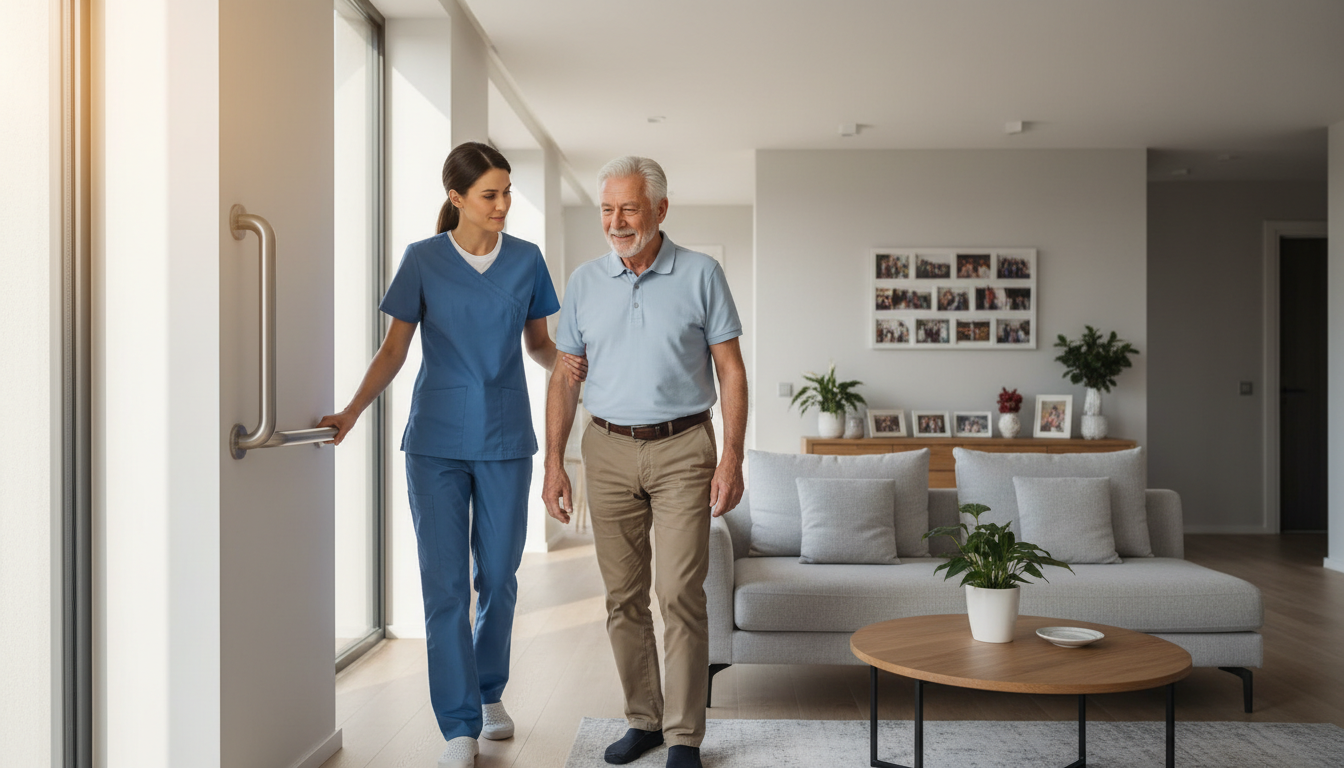
NDIS tracheostomy care at home provides essential clinical support for participants who require help with airway management tasks like suctioning, tube maintenance, and stoma cleaning. These services are typically delivered by registered nurses or trained support workers under high intensity support categories to ensure safety, minimize infection risks, and enhance quality of life in a home setting.
Managing a tracheostomy at home often feels like a high-stakes balancing act where the margin for error is nonexistent. For NDIS participants and their families in Sydney, the weight of constant airway maintenance, suctioning schedules, and infection control can lead to significant clinical anxiety. Quality care is about more than just checking boxes; it requires a sophisticated clinical framework that prioritizes safety and respiratory stability. In this article, we examine the complexities of NDIS high intensity supports and the vital distinction between registered nurse oversight and delegated care. You will discover practical strategies for daily maintenance, essential protocols for emergency preparedness, and how active clinical management through our SALUS model creates a safer, more predictable environment for long term airway health at home.
Navigating Complex Airway Management for NDIS Participants in NSW
Living with a tracheostomy in a residential setting represents a significant transition for NDIS participants across Sydney and New South Wales. While a tracheostomy is a life sustaining intervention, the reality of managing complex airway needs at home can feel daunting for families. The technical requirements, from maintaining tube patency to monitoring for respiratory distress, demand a level of precision that goes beyond standard disability support.
Build Your Community (BYC) addresses this complexity by acting as a managed healthcare brokerage. We provide more than just a staff member on a roster; we offer a robust clinical safety net designed to protect participants. In regions like Norwest and Bella Vista, finding reliable, high quality care can be difficult due to the specialized skills required for safe intervention. Many families struggle to bridge the gap between hospital discharge and sustainable, long term home support.
By leveraging the SALUS clinical care pathway, we ensure that NDIS tracheostomy care at home is governed by strict Australian quality frameworks. Our role is to actively manage every engagement, ensuring that clinical standards are met and that families feel supported by an expert team rather than navigating the healthcare system in isolation. This proactive oversight is essential for maintaining safety in a home environment.
Understanding NDIS Tracheostomy Care as a High Intensity Support
Tracheostomy management is formally classified by the NDIS as a High Intensity Daily Personal Activity. This designation reflects the technical complexity and the inherent risks associated with airway management; it acknowledges that the level of skill required to maintain a patent airway is far greater than standard personal care. For participants and families arranging NDIS tracheostomy care at home, this classification is significant because it dictates specific funding requirements based on NDIS Skill Descriptors. These descriptors ensure that the support provided is safe, competent, and tailored to the participant's unique physiological needs.
Under the NDIS Quality and Safeguards Commission, high intensity support services are subject to rigorous Practice Standards. These standards mandate that any worker providing tracheostomy care must have undergone competency based training and regular assessments. These supports are not standard or 'off the shelf' services. They require a sophisticated level of clinical governance to ensure that every staff member can identify early signs of respiratory distress or infection. This alignment with national standards is what prevents clinical drift and ensures that the care environment remains as safe as a hospital setting.
BYC operates within this framework by providing active oversight of the clinical engagement. We ensure that the training provided to staff is not a one-time event but a continuous process of skill validation. In the Norwest and Bella Vista regions, we bridge the gap between high level clinical requirements and daily home life by ensuring all practitioners meet the necessary NDIS descriptors. This proactive approach to governance ensures that the high intensity nature of the care is matched by a high level of professional accountability.
Registered Nurse Oversight vs. Delegated Care: Knowing the Difference

The distinction between Registered Nurse (RN) led care and delegated support is often the most critical decision in a home care plan. In the Australian healthcare context, particularly under the NDIS Quality and Safeguards Commission, the delegation of care is a formal process. It occurs when an RN transfers the authority to perform a specific clinical task, such as routine suctioning or inner cannula cleaning, to a disability support worker. However, this transfer is strictly conditional upon the worker's demonstrated competency and the participant's clinical stability.
Legal and clinical frameworks in Australia dictate that certain high risk activities, including the initial assessment of a new stoma or managing acute respiratory distress, remain the sole responsibility of an RN. Delegation is never a set and forget arrangement. It requires the RN to remain accountable for the delegation process, ensuring the worker is not only trained but continuously supervised. If a participant's health fluctuates, the RN must reassess whether delegated care remains safe or if a higher level of clinical intervention is required immediately.
Build Your Community (BYC) functions as a managed healthcare brokerage to eliminate the risks associated with unmanaged delegation. We ensure that every support worker has undergone rigorous, participant specific training before they are permitted to assist with NDIS tracheostomy care at home. This oversight is maintained through the SALUS clinical care pathway, which provides a structure for regular clinical audits and competency reviews.
Task Type | Typical Provider | Clinical Requirement |
|---|---|---|
Acute Assessment | Registered Nurse | Mandatory clinical judgment |
Routine Suctioning | RN or Trained Delegate | Competency-based sign-off |
Care Plan Review | Registered Nurse | Regulatory compliance |
Emergency Response | RN or Trained Delegate | Immediate protocol execution |
By actively managing these engagements, BYC ensures that the level of skill in the home matches the participant's current health status. This prevents the clinical drift that can occur when supervision lapses, providing families in Norwest and Bella Vista with the assurance that their care team is both legally compliant and clinically capable.
Essential Daily Maintenance: From Suctioning to Skin Care
Daily maintenance is the cornerstone of preventing hospital readmissions and ensuring participant safety. The primary goal is maintaining airway patency; this ensures the tube remains clear of secretions that could otherwise cause respiratory distress. Suctioning is a critical component of this routine. In accordance with Australian clinical guidelines for adults, suctioning should typically be performed using a pressure range of 80 to 120 mmHg. Applying excessive pressure can cause trauma to the tracheal mucosa, while insufficient pressure fails to clear the airway effectively.
The inner cannula requires regular inspection and cleaning, usually at least twice daily or more frequently if secretions are thick. This prevents the buildup of dried mucus that could lead to a total blockage. To support natural lung function, a Heat and Moisture Exchanger (HME), often referred to as a "Swedish nose," is attached to the tube. This device mimics the role of the nose by warming and humidifying inhaled air; this is vital for thinning secretions and protecting the delicate lining of the lungs.
Task | Maintenance Goal | Clinical Standard |
|---|---|---|
Suctioning | Airway patency | 80 to 120 mmHg (Adults) |
Inner Cannula Care | Prevent occlusion | Minimum twice daily cleaning |
Stoma Maintenance | Infection prevention | Daily aseptic cleaning |
HME Replacement | Humidification | Every 24 hours or if soiled |
Stoma care is equally essential for long term health. The stoma site must be cleaned using aseptic techniques to remove discharge and prevent skin breakdown or granulation. We monitor the site for signs of redness, odour, or swelling to catch potential infections early. By integrating these technical tasks into the SALUS clinical care pathway, BYC ensures that every step of NDIS tracheostomy care at home is performed with precision. This structured approach, overseen by a managed healthcare brokerage, transforms complex technical requirements into a safe, sustainable daily routine for participants in Greater Sydney.
Emergency Preparedness: Making Airway Management Safe and Calm
Maintaining a safe and calm environment during a clinical crisis is only possible through rigorous preparation and standardized emergency protocols. While daily maintenance reduces risks, families managing NDIS tracheostomy care at home must be equipped to handle three primary emergencies: blockage, displacement, and bleeding.
A blockage, often caused by a mucus plug, is the most common cause of acute respiratory distress. Displacement occurs when the tube is accidentally dislodged from the trachea, while bleeding may occur at the stoma site or within the airway itself. To mitigate these risks, every participant must have a bedside emergency kit containing two spare tracheostomy tubes; one of the same size and one a size smaller to ensure an airway can be established even if the stoma begins to contract.
Emergency Type | Immediate Clinical Action |
|---|---|
Blockage | Remove HME; perform suctioning; change inner cannula; use manual ventilation if required. |
Displacement | Stay calm; attempt reinsertion with the spare tube; if resistance is met, use the smaller tube. |
Bleeding | Apply light pressure to the stoma; keep the participant upright; seek immediate medical review. |
If the tracheostomy tube comes out completely, the priority is to maintain a patent airway immediately. Attempting reinsertion with the obturator in place is the first step, followed by securing the ties once the airway is confirmed. Having a robust Emergency Management Plan, a core component of the SALUS clinical care pathway, ensures that every support worker knows exactly how to respond without hesitation. By partnering with a managed healthcare brokerage, families in Greater Sydney gain access to 24/7 clinical backup. This level of oversight removes the burden of crisis management from the family, providing a professional safety net that ensures emergencies are handled with clinical precision rather than panic.
How Active Clinical Management via SALUS Improves Outcomes

Transitioning from emergency protocols to long term stability requires a move away from passive staffing toward active clinical oversight. The SALUS clinical care pathway distinguishes BYC from traditional agencies by providing a continuous loop of clinical governance. Instead of simply placing a practitioner in a home, we act as a managed healthcare brokerage that monitors every variable of NDIS tracheostomy care at home. This oversight includes scheduled audits of clinical logs and immediate adjustments to care plans if a participant’s respiratory status or secretion levels fluctuate.
Active management ensures that staff training remains current. Under the SALUS framework, we track the expiration dates of tracheostomy competencies for every support worker, ensuring that high intensity support services are always delivered by practitioners with validated skills. This rigorous approach prevents the clinical drift that often occurs in long term home care settings where routines can become lax. For families in Norwest and Bella Vista, this structure removes the burden of clinical supervision from their shoulders. Families in Greater Sydney can focus on their personal lives, knowing that a dedicated clinical lead is managing the risks, documenting the outcomes, and maintaining the safety of the airway management plan.


