
A double check system secures NDIS medication management at home by verifying participant identity and dosage accuracy through two independent clinical confirmations. This structured process reduces the risk of errors and ensures that all prescribed treatments are administered safely according to professional health guidelines.
Managing complex medication schedules at home often feels like a high-stakes balancing act where a single oversight can lead to severe health complications. For NDIS participants and their families, the fear of a dosage error or a missed interaction is a constant source of anxiety, especially when dealing with high intensity daily personal activities. Precision in the community setting requires more than just a simple checklist; it demands a professional framework that mirrors the safety protocols found in clinical environments. In this article, we examine how a robust double check system mitigates risk and ensures compliance with Australian administration standards. You will learn about the critical role of Registered Nurse oversight, the common pitfalls of home-based care, and how the SALUS pathway provides families in Bella Vista with the clinical security they deserve. By implementing these rigorous standards, you can move from uncertainty to total confidence in your daily health management.
Understanding the Risks of NDIS Medication Management at Home
Supporting participants in their own residence is the cornerstone of the NDIS, fostering independence and community connection. However, the domestic environment lacks the sterile, highly regulated infrastructure of a hospital or clinical ward. In a residential setting, NDIS medication management at home encompasses a broad spectrum of clinical responsibility that extends far beyond the physical act of swallowing a tablet. It requires meticulous control over storage conditions, precise timing to ensure therapeutic efficacy, and vigilant monitoring for side effects or adverse reactions.
It is essential to distinguish between basic medication assistance and high intensity support services. While some participants may only require simple verbal reminders or help opening a bottle, others with complex health needs require direct administration of restricted medications or subcutaneous injections. For these high intensity tasks, the margin for error is non-existent, necessitating a transition from general support to formal clinical governance.
To mitigate these risks, Build Your Community utilizes the Seven Rights of Medication Administration as a foundational safety framework. Every engagement we manage in Norwest and Bella Vista is evaluated against these criteria:
Right Patient: Confirming the identity of the individual.
Right Drug: Verifying the medication against the current prescription.
Right Dose: Ensuring the exact measurement is prepared.
Right Route: Confirming how the medicine is taken, such as oral, topical, or injection.
Right Time: Adhering to the specific schedule required for efficacy.
Right Reason: Understanding why the medication is prescribed to identify unexpected outcomes.
Right Documentation: Recording the administration immediately to maintain a clear clinical trail.
Failure in any one of these areas can lead to significant health complications, which is why clinical oversight is a non-negotiable component of safe home care.
Common Causes of Medication Errors in a Community Setting
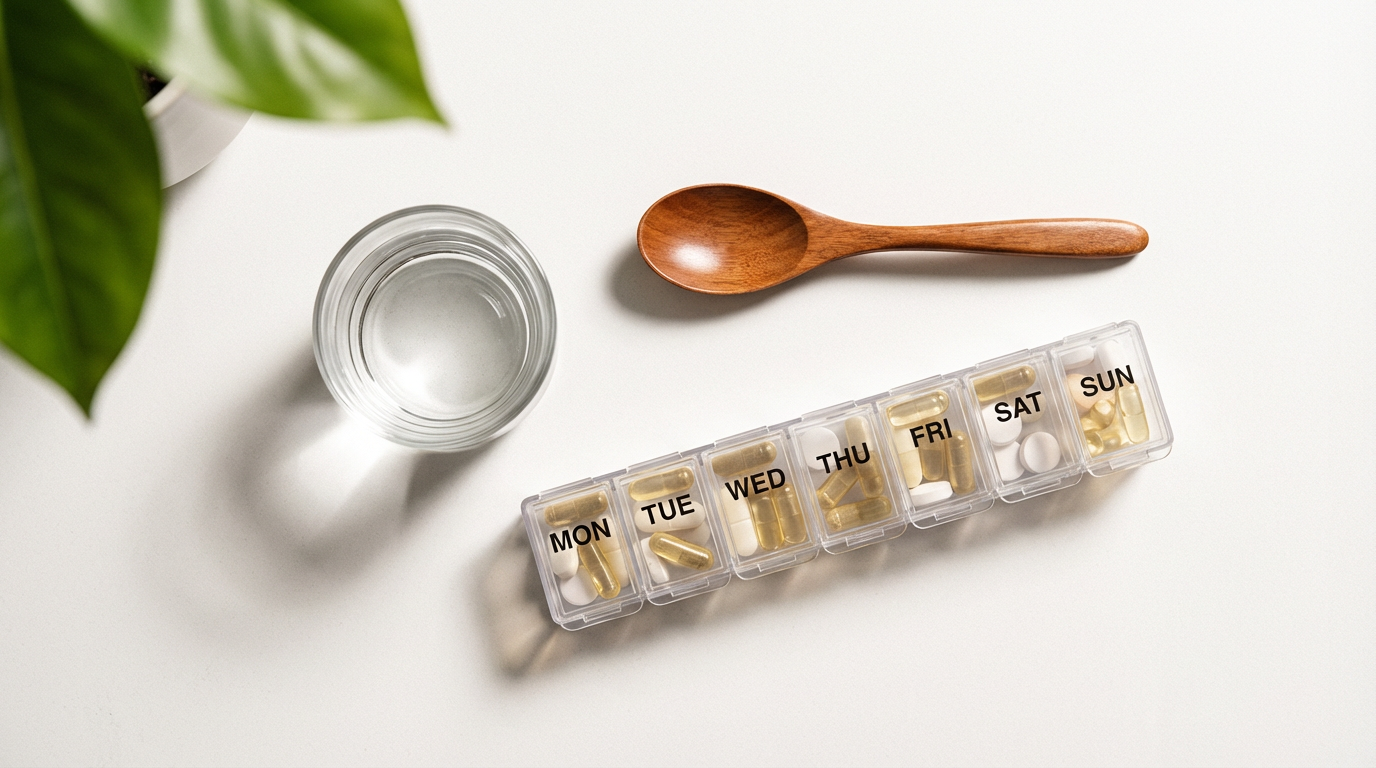
Building on the Seven Rights framework, we must address the specific environmental and clinical pressures that compromise safety during NDIS medication management at home. The community setting, while more comfortable than a hospital, lacks the rigid protocols that prevent human error.
Polypharmacy is a primary risk factor. Many NDIS participants manage complex regimens involving multiple therapeutic classes. When a participant is prescribed ten or more daily medications, the risk of adverse drug interactions or dosing confusion increases exponentially. This is frequently exacerbated by Look-Alike, Sound-Alike (LASA) medications. In a busy domestic setting, medications with similar packaging or phonetic names, such as Prednisolone and Propranolol, can be easily swapped if concentration wavers for even a moment.
Distractions are the most common catalyst for errors in the community. Unlike a controlled clinical ward, a private residence in Bella Vista involves unpredictable interruptions, doorbells, or telephone calls that disrupt the administration workflow. For a support worker, these micro-distractions, combined with the physical fatigue inherent in long shifts, can lead to a skipped dose or a failure to document administration in real time.
High-risk tasks like subcutaneous injections or the administration of PRN (pro re nata) medications introduce further complexity. PRN medications require the worker to exercise clinical judgment regarding symptoms; however, if GP instructions are ambiguous or lack specific triggers, the participant may receive medication too frequently or not at all when required. Without the oversight provided by high intensity support services, these clinical nuances are often missed. Unclear communication between a local GP and the support team creates a dangerous gap. The SALUS Clinical Care Pathway addresses this by ensuring that every instruction is verified and that support workers are never left to interpret clinical ambiguity in isolation. If you have concerns about a current regimen, you can contact our Norwest team for a clinical review.
The Anatomy of a Robust Double Check System

To effectively mitigate the environmental risks discussed previously, professional NDIS medication management at home must move beyond simple observation. A robust double check system is a structured clinical protocol; it is not a casual glance at a Webster-pak by a second staff member. At Build Your Community, we distinguish between two primary methods of verification: dependent and independent double checks.
A dependent double check occurs when a second person observes the first person’s preparation. While better than no check, it is vulnerable to confirmation bias, where the second person inadvertently follows the lead of the first. Conversely, an independent double check requires two individuals to verify the medication details separately and reach the same conclusion without influence from the other. This method is the gold standard for high-risk medications where the clinical impact of a calculation or selection error is severe.
A professional double check involves a three point verification process before the medication reaches the participant:
The Original Script: Validating the doctor's initial medical intent and current orders.
The Pharmacy Label: Confirming that the medication dispensed by the pharmacist matches the script exactly.
The Medication Administration Record (MAR): Ensuring the dose, time, and route are correctly transcribed and scheduled for the specific moment of care.
This triangulation ensures that any discrepancy between the prescriber’s orders and the dispensed product is captured before administration. By implementing this level of clinical governance through the SALUS Clinical Care Pathway, we ensure that safety is a repeatable process rather than a matter of chance. If your current support structure lacks this systematic rigor, you should contact our Norwest team to discuss integrating high intensity support services into your plan.
The Role of Registered Nurse Oversight in High Intensity Daily Personal Activities
While a double check system provides a procedural barrier against error, NDIS High Intensity daily personal activities (Group 0104) require a deeper layer of clinical governance. For participants with complex needs, such as those requiring subcutaneous injections, enteral feeding, or management of severe dysphagia, medication administration is no longer a generic support task; it is a clinical intervention.
In these scenarios, a support worker must operate under the formal delegation of a Registered Nurse (RN). This RN oversight is what differentiates high intensity support services from standard care. The process involves the RN conducting a specific competency assessment of the worker, ensuring they possess the practical skills and theoretical knowledge to manage the participant’s specific regimen. This oversight ensures that the worker is not merely performing a mechanical action but understands the clinical implications of the medication being delivered.
Build Your Community provides this safety net through the SALUS Clinical Care Pathway. Instead of simply following a checklist, workers are supported by clinical expertise that monitors patient response and identifies subtle physiological changes. Our managed healthcare brokerage in Norwest ensures that every delegation is reviewed regularly, closing the gap between a doctor’s prescription and the daily reality of home care. If your care plan involves Group 0104 activities, you should contact our Norwest team to ensure your support workers are appropriately trained and delegated.
Australian Standards and NDIS Medication Administration Guidelines
Clinical governance in a community setting relies on strict adherence to the NDIS Practice Standards, specifically the Quality Indicators regarding the management of medication. Central to this framework is a current Medication Management Plan (MMP). An MMP is not a static document; it must be reviewed by a GP or pharmacist at least annually or immediately following a hospital discharge. These transitions of care are high risk periods where medication regimens often change, making an outdated plan a significant liability for NDIS medication management at home.
Dose administration aids, such as Webster-paks, are frequently used to simplify complex schedules. While these are valuable tools for reducing preparation errors, they are not a total solution. A pack cannot verify the 'Right Reason' or monitor a participant's physiological response to a drug. Support workers must still validate the pack against the Medication Administration Record (MAR) to ensure clinical accuracy.
Furthermore, the NDIS Quality and Safeguards Commission requires mandatory incident reporting for any medication error, including missed doses or incorrect administration. This process is essential for identifying systemic failures. By utilizing the SALUS Clinical Care Pathway, we ensure that every high intensity support service meets these Australian standards. If you need to verify that your current documentation meets these regulatory requirements, you should contact our Norwest team for a clinical consultation.
How the SALUS Pathway Enhances Safety for Bella Vista Families
Adhering to national standards is the baseline for safety, but Build Your Community elevates these requirements through the SALUS Clinical Care Pathway. Unlike traditional models that merely facilitate a transaction between a participant and a staff member, our approach functions as a managed healthcare brokerage. We do not simply find a worker to fill a roster; we actively manage the clinical outcome by governing the relationship between the consumer and the healthcare professional.
For families in Bella Vista and the broader Hills District, this means our Norwest-based team takes a proactive role in clinical coordination. When a medication change occurs, we ensure the loop is closed by communicating directly with local GPs and pharmacists across the Hills. This local presence allows for rapid verification of scripts and ensures that any adjustments to high intensity support services are reflected in the Medication Administration Record immediately.
The SALUS framework ensures that NDIS medication management at home is never performed in a vacuum. By integrating clinical oversight into the daily workflow, we transform home care into a professionalized extension of the healthcare system. This managed approach removes the burden of clinical coordination from the family, placing it firmly in the hands of professionals who understand the nuances of Australian healthcare frameworks. If you require a higher standard of clinical governance for your family, you should contact our Norwest team to discuss a managed pathway.
Medication Safety FAQ for NDIS Participants and Carers
Managing complex health needs requires navigating specific regulatory and clinical requirements. Below are the answers to the most common questions regarding safety protocols and governance.
Can NDIS support workers administer medication? Yes, support workers can administer medication, but their scope is strictly defined by their level of training. For high intensity support services, such as subcutaneous injections or managing complex dysphagia, the worker must receive formal training and a delegation of care from a Registered Nurse. This clinical governance ensures that NDIS medication management at home remains safe, professional, and compliant with quality frameworks.
What steps should be taken if a medication error occurs? Immediate medical review is the priority; contact a GP or emergency services to assess the participant's physiological state. Once the participant is stable, the incident must be documented in the Medication Administration Record and reported to the NDIS Quality and Safeguards Commission within required timeframes. Through the SALUS Clinical Care Pathway, we facilitate a comprehensive root cause analysis to identify systemic failures and update the Medication Management Plan accordingly.
What are the consequences of medication errors? Errors can lead to severe health complications, hospitalisation, or reduced therapeutic efficacy. From a regulatory perspective, frequent errors indicate a failure in clinical oversight, which can lead to NDIS compliance sanctions or the loss of provider registration. If you need to audit your current medication protocols or require professional oversight, contact our Norwest team for expert guidance.
Implementing a double check system is a vital safeguard for maintaining accuracy and safety in NDIS medication management at home. By establishing these clear protocols, you can significantly reduce the risk of errors while ensuring consistent care for those who need it most. While managing these systems independently is a great start, professional guidance can provide an extra layer of security. If you want expert help with your care coordination, feel free to explore our Services to see how we can support you.